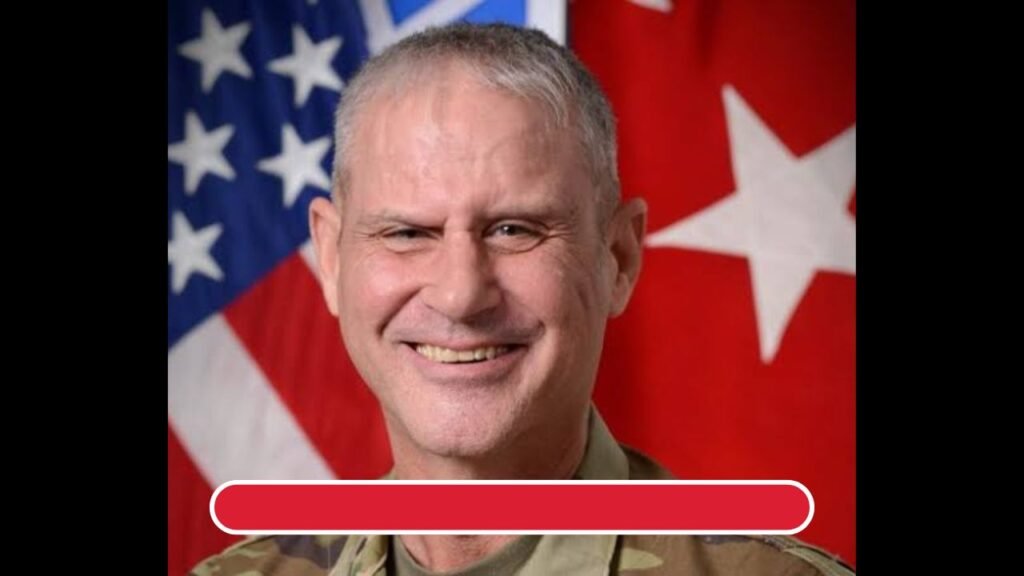
Lieutenant General Charles D. Costanza has spent more than three decades in the U.S. Army, building a career defined by command, military leadership and service in the United States and overseas. His professional record is extensively documented, including his education at West Point, combat experience, command assignments and senior leadership positions.
Questions about Costanza’s personal life, however, often extend beyond his military career. One of those questions concerns his religion.
At present, Charles Costanza’s specific religious beliefs or denomination have not been publicly disclosed through reliable official sources. His Army biographies focus on his military education, assignments, operational experience and leadership achievements rather than his personal faith.
Stick to the Facts
Add arizonapost.shop as a Preferred Source on Google to see more of our stories in your search results.

That makes it difficult to accurately identify him with a particular religion.
No Confirmed Faith
There is no widely available official Army biography that identifies Costanza as belonging to a particular religious denomination.
He has not become publicly associated with a specific church, religious organization or faith tradition as part of his military career.
This distinction is important because military officers can participate in ceremonies that include religious language without publicly identifying their own beliefs.
Consequently, it would be inaccurate to label Costanza as Catholic, Protestant, Jewish, Muslim or a member of another religious tradition without a reliable source confirming that information.
Public Speeches
Like many senior military leaders, Costanza has participated in official ceremonies, memorial events and military gatherings where references to God or blessings can appear.
Expressions such as “God bless” are common in American public and military settings. Such language, by itself, does not establish an individual’s personal religious affiliation.
A public statement containing religious terminology should therefore not automatically be interpreted as a declaration of private faith.
In Costanza’s case, there is no substantial public record in which he explains his religious beliefs in detail.
Army Biography
Costanza’s official military biographies concentrate on his professional achievements.
He graduated from the United States Military Academy at West Point and received his Army commission in 1991.
His subsequent career included assignments with armored formations, overseas service and senior command positions.
The official material documenting that career provides considerable detail about his military development but does not offer a religious biography.
That is why his denomination cannot be established from his Army career record.
A Long Career
Costanza’s military service has covered more than 30 years.
During that period, he served in numerous positions of increasing responsibility and held assignments connected with operations in places including Iraq and Bosnia.
His career eventually brought him to senior command positions, including leadership of the 3rd Infantry Division.
The emphasis in official coverage has consistently been on military readiness, leadership and operational responsibilities rather than personal beliefs.
3rd Infantry Division
Costanza assumed command of the 3rd Infantry Division at Fort Stewart, Georgia, in 2021.
The division is one of the U.S. Army’s historic combat formations and has a long record of service in major conflicts.
During Costanza’s command, he regularly appeared at official ceremonies, community events and military functions.
Some of those occasions included language associated with faith, remembrance and service. Nevertheless, there is no reliable indication that these appearances represented a public declaration of his own religious affiliation.
V Corps
Another major milestone came in April 2024, when Costanza assumed command of V Corps in Poznan, Poland.
The corps has an important role in U.S. Army operations across Europe and works closely with NATO allies and partner nations.
His responsibilities as V Corps commander placed him in a highly visible international military position.
Yet even during this period, publicly available professional biographies continued to emphasize his command experience and strategic responsibilities rather than his personal religious beliefs.
Family Privacy
Costanza’s family has also maintained a relatively private public profile.
He is married to Megan Costanza, and they have two daughters, Claire and Emma.
Megan has participated in military-community activities associated with some of her husband’s assignments, while the daughters have occasionally been acknowledged during official military ceremonies.
The family’s limited public exposure makes it especially important not to infer personal religious beliefs from family participation in ceremonies or community events.
Religion and Military Service
Religion has a long history within the U.S. military, where chaplains serve personnel from many different faiths and provide religious support across installations and deployments.
Military ceremonies can consequently include prayers, blessings or other religious elements without indicating the personal beliefs of every person participating.
Senior officers may also attend events involving military chaplains or religious communities as part of their official responsibilities.
For this reason, individual statements and appearances need to be considered in context before drawing conclusions about an officer’s personal faith.
What Has Not Been Confirmed
Several details that readers may encounter online should be treated carefully.
There is no reliable public confirmation establishing Costanza’s denomination, regular place of worship, religious affiliation or personal theological beliefs.
Likewise, general references to God in speeches should not be used as proof of membership in a particular faith.
Unless Costanza personally discusses his beliefs or an authoritative biography documents them, his religion should be regarded as undisclosed.
Respecting the Record
There is a clear difference between researching a public figure and filling gaps in a public record with assumptions.
Costanza’s military career is a legitimate subject of public interest because his command responsibilities affect U.S. military operations and allied cooperation.
His private religious beliefs are different.
Without a direct public statement or authoritative documentation, assigning a religion to him would go beyond the available evidence.
The Bottom Line
Charles Costanza’s religion has not been publicly confirmed.
His official military biographies provide extensive information about his education, service history, command assignments, deployments and military achievements, but they do not identify a specific religious denomination.
Although he has used conventional expressions such as “God bless” in public settings, those phrases do not establish a particular faith.
The most accurate description, therefore, is that Costanza’s personal religious beliefs remain private and have not been reliably disclosed.
For readers searching for Charles Costanza’s religion, the available evidence does not support identifying him with a specific denomination. His public identity remains centered on his long career as a U.S. Army officer and senior commander, while his personal faith remains outside the documented public record.